

Have you ever pondered the plight of a child bride?
Child marriage is a very complex issue tied to poverty, cultural norms, gender inequality, and crisis situations. Several organizations like UNICEF and Girls Not Brides have consistently highlighted how early marriage disrupts education, results in poor health outcomes, and limits a girl’s future opportunities.
While policy reforms and advocacy campaigns are needed, there is another powerful yet often overlooked tool in prevention: family continuity planning.
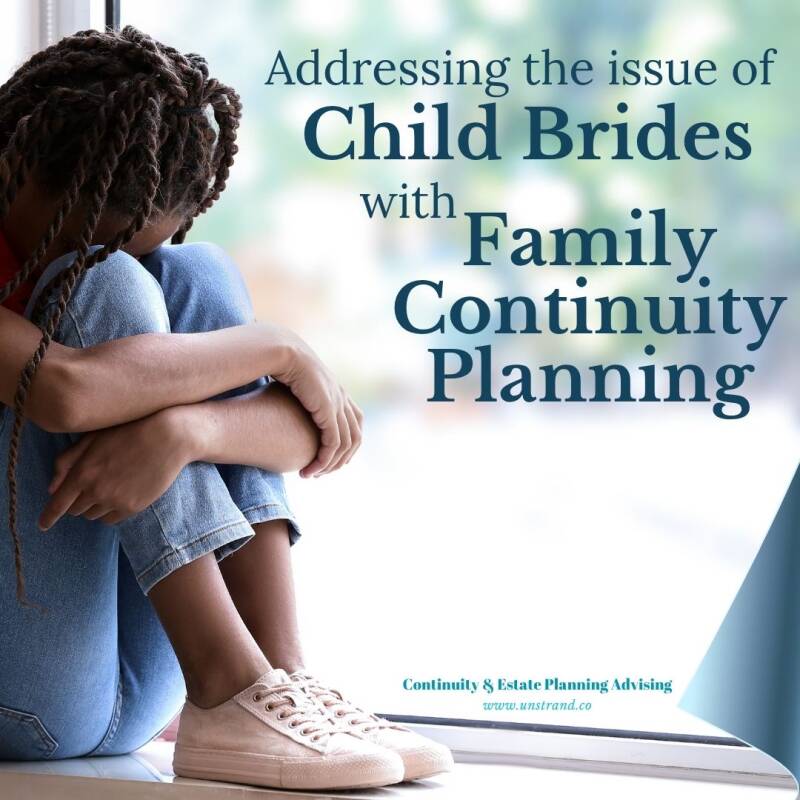
What exactly brings about the consideration for child brides?
It is unfortunate for families to willingly offer their under-aged daughters in marriage. They rarely make these decisions in isolation. In many cases, it is considered an option for
- economic relief
- a way to secure a child’s future
- a response to devastating life events(death, illness, displacement, or financial crisis)
When families find themselves in situations like these, they may resort to decisions that offer short-term survival but long-term harm.
This is where continuity planning becomes essential.

What is Family Continuity Planning?
Family continuity planning is the intentional act of secure yourself and loved ones- legally, financially and in other forms, and ensuring that they are resilient no matter the experiences that they face.
Click here to watch this video about family continuity planning.
How can Family Continuity Planning help prevent Child Marriages?
1. Financial security
One of the leading drivers of child marriage is financial strain. Continuity planning helps families secure their assets, build emergency funds, create income growth strategies and even identify support systems before potential crises occur.
When families are financially prepared, they are less likely to view marriage as a survival strategy.
2. Legal protection for children through documentation
A key part of family continuity planning is proper documentation. In the absence of parents (due to death, illness, or migration), children are particularly vulnerable. Considering situations where children are sent off to be with guardians, having records like the guardianship instructions (as stated in the letter of instruction attached to a Will), birth certificates, medical and educational records among many more, will prove to be helpful in securing stability and protection for the minor.
These documents help establish identity, protect legal rights, and ensure children remain in school—one of the strongest deterrents to early marriage.
3. Prioritizing Education as a Continuity Goal
Families that are intentional about planning are more likely to be intentional about many other things. They tend to see more than what meets the eye. They consider everything as a tool for securing continuity- either for the whole family or for the individual in question. By set educational goals for their children, allocate resources toward schooling and continuous education, they view education as a long-term investment rather than an optional expense.
Education delays marriage and expands opportunity.
4. Strengthening Family Communication & Values
Family continuity planning encourages structured conversations. Asides obvious topics like asset and finances, it allows families to discuss family heritage and values, their long-term vision and goals, protection of vulnerable members, preparedness planning and more.
In the face of crisis, a reminder about what was shared in these conversations can help families stay focused, consider several options and avoid making rash decisions.
Efforts by organizations such as UNICEF focus on policy, education, and global awareness.
However, immediate change happens at the family level—where decisions are made daily.
Family continuity planning bridges this gap by addressing the root causes, not just the symptoms and moving families from awareness mode to action.

Final Thoughts
Child marriage is often a reaction -not neccesarily a preference. When families are unsupported, unprepared, or overwhelmed, harmful decisions can feel like the only option.
But when families are equipped with plans, resources, knowledge and support systems, they gain the power to choose differently.
Family continuity planning transforms vulnerability into resilience—and in doing so, helps protect childhood itself.
Add comment
Comments